It’s 9:00 PM. You’ve just finished cooking a feast. The sink is full, you’re tired, and the dishwasher door is open, beckoning you to just toss everything in and go to bed.
We get it. It is tempting. In fact I would be lying if I said that I've not done this myself many times back in the day.
But if you have invested in a premium blade like one of ours with high end steel or a natural olive wood handle, then putting it in the dishwasher is the quickest way to turn a professional tool into a dull, cracked piece of metal.
Here is exactly why the dishwasher is the enemy of your knife block, and the 30-second habit that will keep your blades razor-sharp for a lifetime.
1. The Heat vs The Handle
The biggest casualty of the dishwasher isn’t actually the blade...it’s the handle.
Many of our knives (like the Blickling or Comanche ranges) feature natural wooden handles. Wood is a living material, it expands when hot and wet, and contracts when cool and dry.
The intense heat cycle of a dishwasher forces the wood to swell rapidly, and the drying cycle shrinks it just as fast. Over time, this causes the wood to warp, dry out, and eventually crack. It can also loosen the rivets that hold the handle to the steel tang, making the knife dangerous to use.
2. Abrasive Detergents Dull the Edge
Dishwasher tablets are amazing at scrubbing lasagna off a baking dish because they are abrasive. They are essentially blasting your dishes with sandy, gritty water.
When that abrasive grit hits the microscopic, razor-thin edge of your knife for 60 minutes straight, it acts like a blunt file. It rounds over the fine edge you rely on for slicing tomatoes and onions. You might not notice it after one wash, but after five? Your knife will be slipping off the onion skin rather than slicing through it.
3. The "Cutlery Mosh Pit"
Inside a running dishwasher, things move. Water jets push items around. If your knife is sitting in the cutlery basket or on the top rack, it is vibrating against ceramic plates, glass, or other metal cutlery.
Ceramic is harder than steel. If your blade edge bangs against a ceramic plate during the wash cycle, it will chip. These tiny micro-chips ruin the smooth cutting action and require professional sharpening to fix.
The 30-Second Fix: How to Clean Like a Pro
The irony is that cleaning a knife by hand is actually faster than loading it into the rack.
The Norvic Golden Rule:
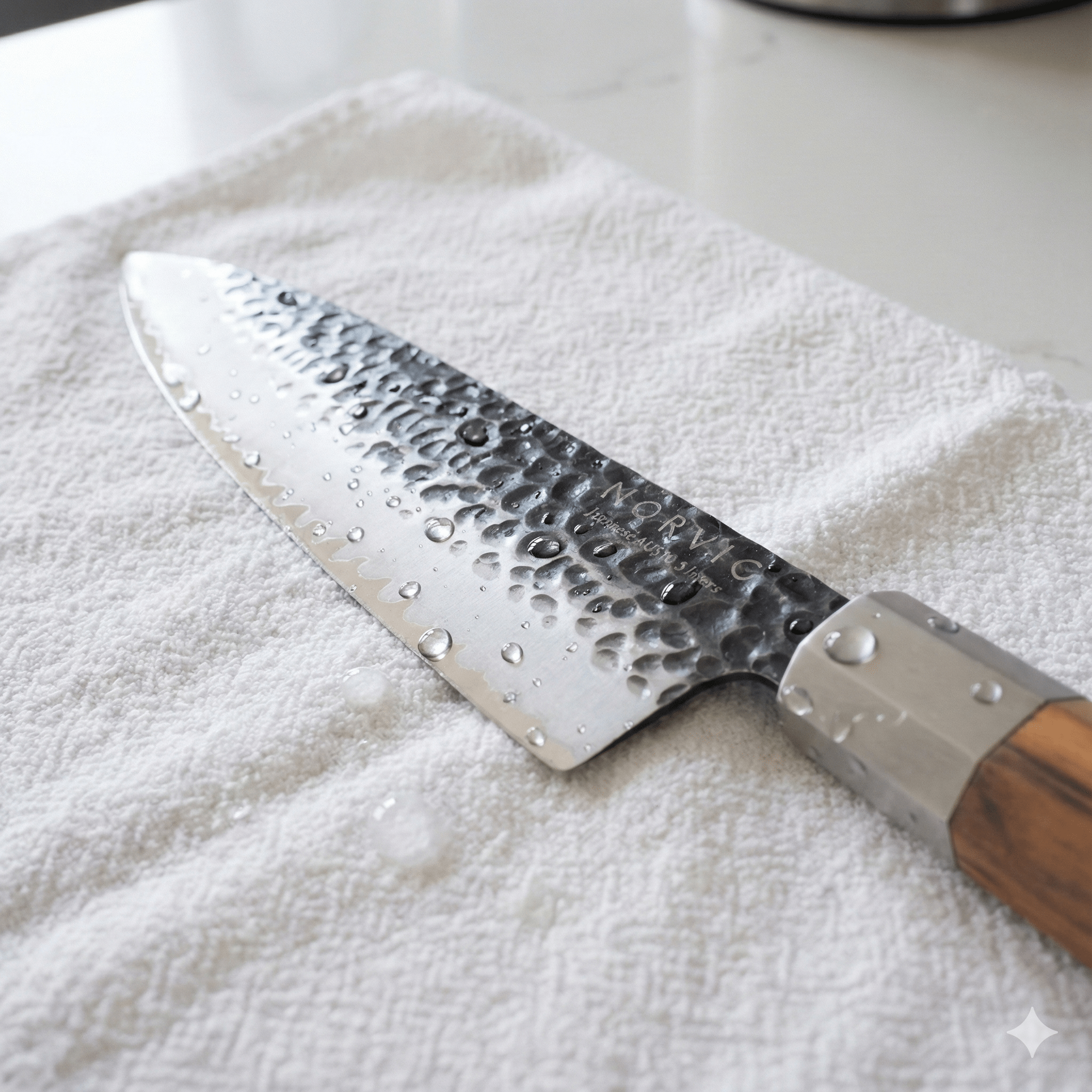
- Wash: Immediately after use, run the blade under warm water with a drop of mild dish soap and a sponge. (Wipe away from the edge, never towards it!)
- Dry: Dry it immediately with a tea towel. Never let it air dry, as standing water can cause rust spots on high-carbon steel.
- Store: Place it back in its sheath, block, or magnetic strip.
That’s it. Respect the tool, and it will serve you for years.
Need to restore a knife that’s seen better days?
If you’ve been guilty of the "dishwasher sin" and your edge is gone, it might be time for a reset. Check out our Whetstones & Sharpening Tools or treat yourself to a fresh start with the Sandringham Collection. Also we have something very special in the works to help reinvigorate these mistreated blades...Norvics premium sharpening service may be coming very soon.
Share:
Discover the Excellence of Precision Knives: Celebrating Our Great Reviews and Commitment to Quality
Why "Factory Sharp" Isn't Actually Sharp (And Why It Matters)